VOD Review Is Quietly Wrecking Your Game — Here's How to Fix It
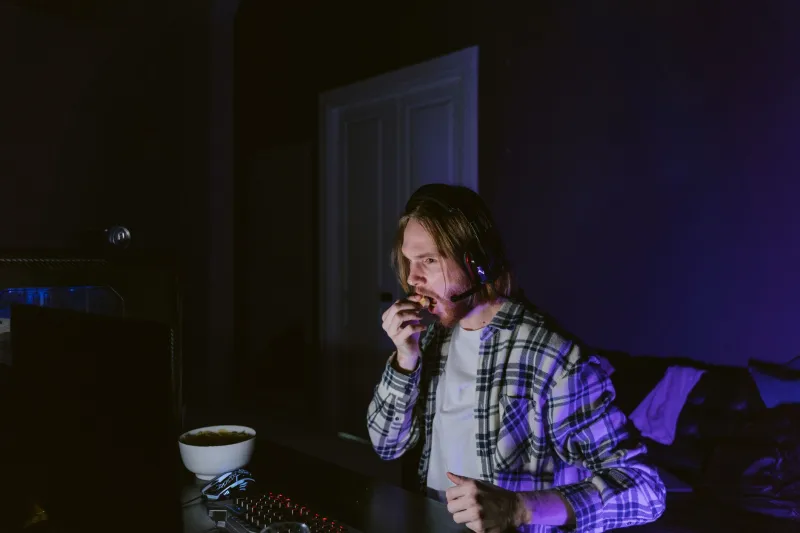
You just dropped a rough match. You died on a peek you knew was bad, you whiffed a spray at point-blank, and your rotations were a mess. So you do the "right" thing — you pull up the replay, crack your knuckles, and start watching yourself lose all over again.
Feels productive, right? Maybe. But there's a real chance you're making yourself worse.
VOD review is one of those habits that gets handed down in competitive circles like gospel. Pros do it. Coaches swear by it. Every "how to rank up" video on YouTube mentions it. And yeah, when it's done correctly, watching your own gameplay is legitimately one of the highest-value improvement tools available to any player who isn't already getting paid. The problem is that most players — even experienced ones — aren't doing it correctly. They're doing something that looks like studying but is actually closer to self-punishment with a timestamp.
The Confirmation Bias Trap
Here's the thing about rewatching your own losses: you already have a story in your head before you press play. You think you choked. You think your team was dead weight. You think your aim was off. And when you sit down to review the footage with that narrative already loaded, your brain goes hunting for evidence to confirm it.
This is textbook confirmation bias, and it hits VOD review hard. You'll pause on every missed shot and sit with it. You'll rewatch the clutch you fumbled three times. But you'll skim right past the round where your positioning was actually solid, or the moment your crosshair placement won you a duel you shouldn't have. Those moments don't match the story, so they don't stick.
The result? You walk away from an hour of "review" with a distorted picture of your own game — one that's weighted almost entirely toward your worst moments. You don't get a realistic diagnosis. You get a highlight reel of your failures, and you've now watched it on repeat.
Analysis Paralysis Is Real, and It Starts Here
Even when players do identify legitimate mistakes, there's another trap waiting: overcorrection. You notice you got caught peeking the same angle twice, so next session you become hyper-cautious on that side of the map — but now you're giving up map control you used to take confidently. You see yourself over-committing on a push, so you start second-guessing every aggressive move, and now your timing is off because you're hesitating mid-stride.
This is analysis paralysis bleeding directly from your review sessions into your live gameplay. You've taken one or two isolated plays, blown them up under a microscope, and tried to rebuild habits around edge cases. Competitive FPS is a game of probabilities and reads, and when you start making decisions based on a handful of bad clips rather than a genuine pattern, you're essentially patching your game with bad data.
Sports psychologists who work with elite athletes call this "over-monitoring" — the phenomenon where conscious attention to mechanics that should be automatic actually degrades performance. You've watched yourself miss that shot enough times that now, in the moment, part of your brain is narrating the movement instead of just executing it.
How Pros Actually Watch Film
Here's the thing that never makes it into the YouTube tutorials: professional players and their coaches approach VOD review with strict structure. It's not a vibe session where they scroll through lowlights and feel bad. It's a disciplined process with specific goals set before the replay even loads.
A few things they do differently:
They set a focus before they hit play. Instead of watching a full match looking for "anything wrong," they pick one element — positioning in post-plant, utility timing, movement before duels — and review with that single lens. This keeps the session from becoming a catalog of everything that went sideways.
They look for patterns, not plays. One bad peek means nothing. The same mistake showing up in round 4, round 11, and round 22 means something. Pros and coaches are hunting for recurring behaviors, not one-off blunders.
They watch wins too. This one gets skipped constantly. Reviewing matches you won — especially close ones — shows you what's actually working. It also gives you a more accurate baseline for what your good play looks like, which makes it easier to identify genuine deviation when it shows up.
They keep the sessions short. Ninety minutes of VOD review is almost never more effective than thirty focused minutes. Fatigue and emotional investment compound over time, and the longer you sit with footage, the more likely you are to spiral.
A Framework That Actually Works
If you want to make VOD review a real part of your improvement process, here's a starting structure you can actually use:
Step 1: Give yourself 24 hours. Don't review a match the same night you played it, especially if it was a loss. Emotional distance matters. Reviewing while you're still frustrated guarantees a skewed session.
Step 2: Pick one question before you start. Literally write it down. "Was my crosshair placement consistent on entry?" "Did I call rotations too early or too late?" One question, one session.
Step 3: Watch at 1.5x speed on first pass. You're not looking for detail yet — you're building a rough map of the match flow. Save full-speed review for moments that flag your attention.
Step 4: Timestamp moments, don't judge them yet. When something catches your eye, mark it and keep moving. Don't rewatch it five times in a row. Collect first, analyze after.
Step 5: End every session with one positive observation. Not to protect your feelings — to calibrate your self-assessment. If you can't find something that worked, you're not looking hard enough, and that's a bias problem worth fixing.
The Bigger Picture
VOD review, done right, is genuinely one of the most powerful tools in a competitive player's kit. The gap between a player who watches film with intention and one who just stares at their own mistakes isn't small — it's the difference between building a real mental model of your game and just reinforcing a bad one.
But the tool only works if you respect how your brain processes self-criticism. Left unchecked, that confirmation bias loop turns review sessions into demoralization sessions, and demoralization doesn't rank you up. It just gives you a timestamp for exactly when things went wrong.
Watch your replays. Just watch them smarter.