Stuck at the Same Rank for Months? Here's Why Your Aim Stopped Growing
The Wall Nobody Warned You About
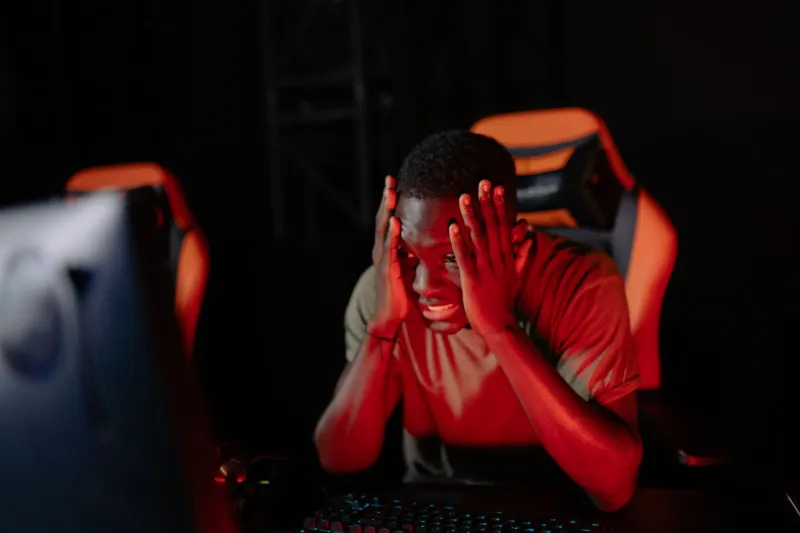
You remember the feeling. A few weeks in, every session felt like progress. Headshots were clicking, your reaction time was tightening up, and your rank was actually moving. Then, almost out of nowhere, it just... stopped. Same drills, same hours, same effort — but the needle quit moving.
Welcome to the plateau trap. It hits almost every competitive FPS player at some point, and it's one of the most demoralizing experiences in the grind. The frustrating part? Most players respond by doing more of exactly what stopped working. More Kovaak's sessions. More ranked games. More spray pattern repetitions. And the wall just gets thicker.
Understanding why plateaus happen — and more importantly, how tournament-level players actually break through them — requires looking at how the brain builds motor skills in the first place.
Why Your Brain Stops Adapting
Aim is a motor skill. That sounds obvious, but it carries real implications for how your nervous system learns and stops learning. Early in your practice arc, almost everything you do generates neural adaptation. Your brain is building new pathways, calibrating prediction models, and refining muscle memory at a rapid rate. This is the beginner gains phase, and it feels incredible.
But the brain is also ruthlessly efficient. Once it's built a good-enough model for a task, it stops investing heavily in refining it. The technical term for this is automaticity — your brain has converted a conscious skill into an unconscious routine. That's great for performance under pressure, but it's terrible for continued improvement. Automaticity essentially means your practice has become maintenance, not growth.
The research on deliberate practice — the kind that actually drives elite performance — is pretty clear on this point. Psychologist Anders Ericsson spent decades studying expert performers across domains, and one of his core findings was that mindless repetition doesn't produce expertise. What produces expertise is effortful practice at the edge of your current ability. The moment your drills feel comfortable, they've probably stopped making you better.
The Periodization Secret Tournament Players Already Use
Here's something most casual grinders don't know: competitive players who regularly show up to LAN events and online opens don't just practice more — they practice differently across different phases of their season.
Periodization is a concept borrowed from athletic training, where coaches cycle athletes through phases of high-intensity work, skill-specific work, and deliberate recovery. The same principle applies to FPS aiming, and it's one of the clearest differences between players who keep climbing and players who stall out.
A simple periodization approach for an FPS player might look like this: spend two to three weeks hammering a specific weak point in your aim (say, target switching or micro-adjustment tracking), then shift to a week of lower-intensity, game-context practice where you're not focused on mechanics at all. Then rotate to a different mechanic. This cycle prevents the brain from fully automating any single pattern before you're ready to move on, and it keeps each practice session in that productive zone of difficulty.
Tournament players often describe this intuitively even when they don't use the academic language. You'll hear pros talk about taking a week off from aim trainers entirely to "just play the game," or deliberately messing with their sensitivity to force their brain to recalibrate. These aren't random decisions — they're the result of experience with what actually works.
Changing Your Practice Environment Is a Cheat Code
One of the most underrated tools for breaking a plateau is environmental variation. If you've been running the same Kovaak's scenario playlist for two months straight, your brain hasn't just adapted to the skill — it's adapted to that specific context. You might be genuinely good at that scenario without meaningfully improving your in-game aim.
Competitive players cycle through at least three distinct practice environments, each serving a different function:
Aim trainer work is great for isolated mechanical drilling. It removes game noise and lets you focus on pure movement and click timing. But it has a transfer problem — skills built here don't always move cleanly into actual game scenarios without intentional bridging.
Custom lobbies and scrimmages are where mechanical skills get stress-tested in game-realistic conditions. Movement is unpredictable, angles are varied, and there's actual decision-making layered on top of the mechanics. This is where aim becomes game sense, and it's a completely different type of cognitive load.
Ranked play adds the pressure variable. Your nervous system behaves differently when stakes are real, and practicing under that pressure — even if it's just your rank on the line — trains a different dimension of performance than either of the above.
Players who exclusively grind one of these environments will plateau faster and harder than players who rotate between all three. If your plateau started after you got really locked into one mode, that's probably your answer.
The Variation Principle: Make Your Drills Uncomfortable Again
Beyond environment, the specific content of your practice needs regular disruption. Here's a practical framework competitive players use:
Constraint training — artificially limit something to force adaptation. Drop your sensitivity significantly lower than your normal setting for a week. Force yourself to aim with only wrist movement, or only arm movement. Play an entire session using only one weapon. These constraints feel terrible at first, and that discomfort is exactly the point. You're forcing your brain back out of automaticity.
Scenario progression — if you've been running the same Kovaak's scenarios, move to harder variants or completely different scenario types. If you've been doing static target scenarios, shift to evasive targets. If you've been doing 1v1 scenarios, try multi-target switching. The unfamiliarity will feel like a regression at first, but within a week or two you'll typically see a jump in your original scenarios when you return.
Opponent variation — if your custom lobby is always the same group of friends at similar skill levels, try to get into scrimmages with players above your rank. The pace and precision of higher-level opponents forces adaptation that same-level practice simply can't generate.
The Mental Side of a Plateau
There's one more layer here that often gets ignored: the psychological impact of a plateau can actually make it worse. When progress stalls, a lot of players start to grind harder out of frustration, which increases fatigue without increasing quality. Diminishing returns spiral into negative returns.
Some of the most consistent performers in the competitive FPS scene are the ones who've learned to treat a plateau as diagnostic information rather than a personal failure. It's your training system telling you something needs to change — not a verdict on your potential.
If you've been stuck for more than three weeks despite consistent practice, the answer almost certainly isn't more of the same. It's a deliberate shift in what you're doing, how you're doing it, and where you're doing it.
The players who keep climbing aren't the ones who grind the hardest. They're the ones who stay curious about why the grind works — and smart enough to change it when it stops.